Unveiling the Magic of Fairies: A Celtic Typography Guide
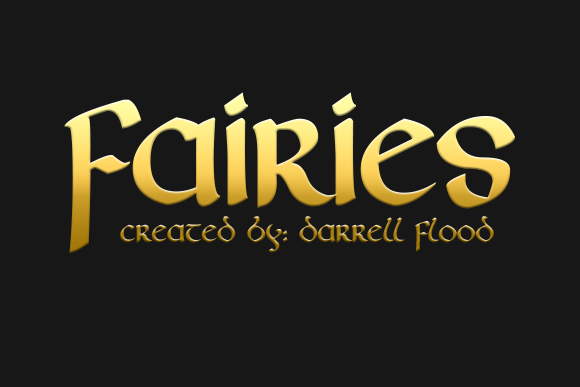
The world of digital typography is vast, but few styles capture the imagination quite like the intricate, winding forms of Celtic script. When you encounter Fairies, a font created by the talented designer Darrell Flood, you are looking at more than just a typeface; you are engaging with a piece of art inspired by the legendary Book of Kells. This elegant Celtic style font brings a specific kind of mysticism to projects, but its unique character forms require a thoughtful approach. For designers, marketers, and hobbyists alike, understanding the nuances of this font is the difference between creating a captivating experience and a cluttered mess.
The Allure of the Book of Kells Aesthetic
The primary draw of Fairies is its undeniable connection to early medieval Irish art. The Book of Kells is famous for its elaborate decoration and the complexity of its lettering. Darrell Flood has successfully translated these heavy, interlocking historical forms into a digital format. This font is not merely a collection of letters; it is a texture. It evokes a sense of history, fantasy, and organic growth. For creators working on fantasy novel covers, role-playing game assets, or St. Patrick’s Day branding, this aesthetic is incredibly potent. However, the very complexity that makes it beautiful is also what makes it dangerous to use incorrectly.
The Trap of Decorative Overload
The most common mistake beginners make with Fairies is treating it like a standard serif or sans-serif font. The intricate "knotwork" and heavy strokes characteristic of this style are designed for impact, not for bulk text. A frequent error seen in amateur design is setting entire paragraphs in a Celtic uncial or insular script. Because the letterforms in the Fairies font often feature loops, serifs, and varying widths, reading a long sentence becomes a cognitive workout. The eye struggles to track the line, and the message is lost in the visual noise.
Consider a small business owner creating a flyer for a local craft fair. If they use Fairies for the event details, the address and time might look artistic, but they will be unreadable to someone glancing at it from a distance. This mistake affects usability and communication directly. The corrective approach here is restraint. Use Fairies exclusively for display purposes—large headers, logos, or single-word accents. For the body text, pair it with a clean, highly legible sans-serif font like Helvetica, Arial, or even a simple serif like Garamond. This contrast allows the Celtic font to shine without overwhelming the reader.
Understanding the "Pagan" vs. "Christian" Nuance
While the visual style is universally recognized as "Celtic," there is a subtle distinction in the history of these letterforms that professionals should understand. The Book of Kells is a Gospel book, and its scripts (Insular Majuscule and Minuscule) have roots in Christian manuscript tradition. However, in modern pop culture, this style is heavily associated with fantasy, Druids, and nature magic.
A misunderstanding arises when a brand tries to use Fairies for a specific historical context without checking the vibe. For example, using this font for a serious historical academic paper on 6th-century agriculture might feel slightly anachronistic or "fantastical" to purists. Conversely, for a fantasy novel, it is perfect. The advice here is to know your audience. If you are marketing a product with earthy, organic, or magical themes, the Fairies font is an excellent choice. If you are aiming for a strict, historical recreation of Roman Britain, you might look for a different typeface. The font creates an expectation of whimsy or mysticism; ensure your content delivers on that promise.
Technical Pitfalls: Spacing and Readability
One of the most overlooked technical details when using Fairies is kerning and tracking. Celtic fonts often have irregular bounding boxes because of their decorative swirls. The default letter spacing provided by a design program is rarely perfect for a font like this.
A common scenario involves a designer dropping the font into a text box and noticing that the letters look too cramped or, conversely, too far apart. The "f" and "i" might collide, or the serifs might touch, creating a visual blob. This reduces the quality of the presentation significantly.
How to fix this:
- Manual Kerning: Do not rely on auto-kerning. Go into your design software (like Adobe Illustrator or Photoshop) and manually adjust the spacing between specific letter pairs. Pay close attention to curved letters meeting straight ones.
- Size Matters: Because Fairies is inspired by manuscript lettering, it generally looks best at larger sizes. Try to avoid using it below 24pt. At smaller sizes, the intricate details of the font will blur together, turning the text into gray noise.
- Contrast Checks: Celtic fonts are often "heavy." They absorb a lot of ink. If you place Fairies in a dark color on a dark background, or use a thin stroke on a light background, the legibility vanishes. Always ensure high contrast between the font color and the background.
Contextual Application: Where Fairies Belongs (and Doesn't)
Choosing the right font is about matching the tool to the job. Fairies excels in specific niches but fails in others. Understanding this prevents wasted time and poor design choices.
Ideal Scenarios:
- Fantasy Book Titles: It immediately signals the genre to the reader.
- Pub or Tavern Branding: It evokes a rustic, old-world charm.
- Event Invitations: For weddings with a medieval theme or Halloween parties, it sets the mood instantly.
- Tattoo Design: The flowing lines translate well to body art concepts.
Poor Scenarios:
- Mobile App Interfaces: The font is too heavy and complex for UI elements. It will slow down visual processing for users.
- Corporate Financial Reports: It lacks the neutrality and seriousness required for business data.
- Subtitle Tracks: Never use a decorative Celtic font for video subtitles. It is impossible to read quickly.
Licensing and Evaluation: The Darrell Flood Standard
Before downloading or using Fairies, it is crucial to understand the creator behind it. Darrell Flood is a prolific font designer known for offering a wide variety of styles, often with generous licensing terms for personal use. However, "free for personal use" is a term that is frequently misunderstood by small business owners and entrepreneurs.
A common mistake is assuming that because a font is free to download, it is free to use for commercial purposes (like selling T-shirts, using it in a paid app, or on a monetized YouTube channel).
The Corrective Step: Always check the readme file or the license text included with the download. If you intend to use Fairies for commercial gain, look for the commercial license option. Supporting the designer ensures they can continue creating high-quality typefaces. Ignoring this step can lead to legal issues or, at the very least, the ethical discomfort of profiting from someone else's art without compensation.
Pairing Fairies with Modern Elements
One of the most effective ways to use Fairies is in contrast with modern design elements. Because the font is so organic and historical, pairing it with a sleek, geometric sans-serif can create a stunning visual hierarchy. This technique is often used in movie posters for genres like "Urban Fantasy."
For instance, imagine a poster for a book about wizards in New York City. You might use Fairies for the main title to represent the magic, and a clean font like Roboto or Futura for the author's name and tagline. This balances the "whimsy" of the Celtic style with the "reality" of the modern world. It helps ground the design, making it look professional rather than chaotic.
Final Thoughts on Quality and Satisfaction
Using a font like Fairies is about embracing a specific aesthetic. It requires a bit more care than a standard business font. By avoiding the pitfalls of overuse, ignoring spacing, and misunderstanding the commercial license, you can harness the full potential of this elegant Celtic style. Whether you are a hobbyist designing a Dungeons & Dragons character sheet or a marketer creating a seasonal campaign, the key is to let the font do the heavy lifting on the "vibe," while you ensure the content remains clear and accessible.
Remember, good typography is invisible when it’s working well, but evocative when it’s used for display. Fairies falls firmly into the latter category. Treat it with respect, mind your kerning, and it will add a touch of timeless magic to your work.