The Allure of the Summer Vacation Font: A Designer's Guide
When searching for a typeface that conveys warmth, personality, and a handcrafted feel, the Summer Vacation script font often emerges as a compelling choice. Its flowing, connected letters and natural imperfections evoke a sense of casual elegance, reminiscent of handwritten notes or vintage signage. This article explores the distinct characteristics of the Summer Vacation font, examining its ideal applications, potential limitations, and how it fits into the broader landscape of script typefaces available to designers and creatives.
Understanding the Core Characteristics of Summer Vacation
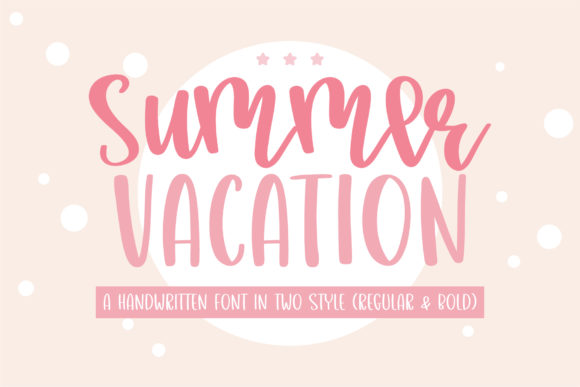
At its heart, Summer Vacation is a gorgeous script font defined by its organic, flowing style. Unlike more formal or rigid calligraphic scripts, it aims for a relaxed and approachable aesthetic. The letterforms often feature a slight baseline variation and subtle irregularities that mimic the natural pressure and rhythm of handwriting. This gives text set in Summer Vacation a sense of authenticity and movement, making it feel less digital and more personal. The font typically includes a full set of uppercase and lowercase letters, numerals, punctuation, and often stylistic alternates or ligatures that allow for customized, connected letter pairs, enhancing its natural appearance.
Its "unique style" is not about being overly ornate or difficult to read. Instead, its distinctiveness lies in balancing legibility with a strong, friendly personality. This makes it incredibly versatile. It can feel playful for a children's brand, sophisticated for a wedding invitation, or nostalgic for a retro-themed design. The key is that it adapts to the context provided by the surrounding design elements—color, imagery, and layout.
When Is a Script Font Like Summer Vacation the Right Choice?
Choosing any script font requires careful consideration of context and audience. Summer Vacation tends to excel in specific scenarios where its personality can shine without compromising communication.
Best-Fit Scenarios and Use Cases
Consider Summer Vacation for projects where a human touch is paramount. This includes branding for artisanal products, boutique shops, or personal blogs where the founder's personality is part of the brand story. It is exceptionally well-suited for event stationery—think wedding invitations, greeting cards, and party announcements—where elegance and personal sentiment are key. In digital design, it works beautifully for hero text on landing pages, social media graphics with a personal message, or logo accents for creative businesses. Its natural flow also makes it a good candidate for short, impactful quotes or pull-out text in editorial layouts.
Situations to Reconsider or Pair Carefully
Despite its versatility, Summer Vacation has inherent tradeoffs common to most script fonts. The primary consideration is legibility at small sizes. Its connected letterforms and decorative style can become difficult to read when used for long blocks of body copy, detailed product descriptions, or in contexts where clarity is critical, such as legal disclaimers or technical instructions. In these cases, it should be reserved for headlines, logos, or short accents, paired with a highly legible sans-serif or serif font for the main text.
Furthermore, its casual, organic feel might not align with every brand's desired image. For projects requiring a tone of utmost seriousness, corporate formality, or cutting-edge minimalism, a more neutral or geometric typeface would likely be a better fit. The goal is to match the font's voice with the project's message.
Comparing Summer Vacation to Other Script Styles
The world of script fonts is vast, encompassing a wide spectrum from formal calligraphy to rough, hand-drawn styles. Understanding where Summer Vacation sits on this spectrum helps in evaluating alternatives.
- Formal Calligraphic Scripts: Fonts like Snell Roundhand or Zapfino are based on traditional penmanship with consistent, elegant strokes. They convey a higher level of formality and are often used for luxury branding or very formal invitations. Summer Vacation is less structured and more relaxed by comparison, offering a friendlier, more approachable vibe.
- Brush Scripts: Fonts such as Brush Script or Pacifico mimic the look of paint or marker, often with more uniform stroke width and a bolder presence. They can feel energetic or retro. Summer Vacation typically has a finer, more delicate line quality, lending itself to a softer, more personal expression.
- Modern Handwritten Scripts: This category includes fonts that emulate contemporary, casual handwriting, sometimes with a messy, authentic feel. Summer Vacation can fall into this broad category but often leans toward a more polished and aesthetically "designed" version of handwriting, balancing naturalism with visual appeal.
When evaluating alternatives, consider not just the style but also the technical features. Does the alternative font include the ligatures and alternates needed to achieve a truly connected, natural look? Does it support the necessary languages? These practical details are as important as the visual style.
Practical Evaluation: Making an Informed Decision
To determine if Summer Vacation is the optimal choice for your project, a structured evaluation is helpful. Move beyond simply liking the font's appearance in a preview.
- Test in Context: Do not evaluate the font in isolation. Set your actual project text in Summer Vacation. Place it within your intended layout, surrounded by other design elements. How does it interact with your chosen colors and images? Does it maintain its intended personality at the planned size?
- Assess Legibility Across Devices: View the text on different screens (desktop, mobile) and, if applicable, in print at various sizes. Ensure the key message remains clear and easy to read for your target audience.
- Consider the Full Workflow: Examine the font's character set. Do you need special characters or language support? Are the stylistic alternates easily accessible in your design software? A beautiful font with limited functionality can create workflow frustrations.
- Explore the "Feel" of Alternatives: If you are unsure, create a shortlist of 2-3 script fonts in different styles (e.g., one more formal, one more casual than Summer Vacation). Compare them side-by-side with your project brief in mind. Which one most accurately and effectively conveys the desired emotion and brand voice?
Beyond the Font File: Effective Implementation
Choosing Summer Vacation is only the first step. Effective implementation ensures it delivers the desired impact. Here are key considerations:
- Pairing with Secondary Fonts: As mentioned, script fonts rarely work alone for comprehensive text needs. Pair Summer Vacation with a complementary sans-serif or serif font for body copy. Choose a secondary font that shares a similar x-height or visual weight to create harmony, or one that provides a clear contrast to establish hierarchy.
- Spacing and Alignment: Script fonts often require adjustments to letter-spacing (tracking) and line-spacing (leading) to look their best. Too tight, and the letters can clash; too loose, and the connected flow is broken. Experiment to find the optimal settings for readability and aesthetic appeal.
- Color and Background: The delicate nature of many script fonts, including Summer Vacation, means they need sufficient contrast against their background. Avoid placing light-colored script text on busy, light backgrounds. Dark text on a light, clean background is typically the most legible and safe approach.
Conclusion: A Tool for Specific Expressions
The Summer Vacation script font is a valuable tool in a designer's typographic toolkit. Its strength lies in its ability to inject warmth, personality, and a handcrafted quality into a project. It is not a universal solution but rather a specialist choice for contexts where its unique, natural style aligns with the communication goals. By carefully considering the project's tone, audience, and practical requirements—and by testing the font rigorously within the actual design context—you can make an informed decision about whether Summer Vacation is the right voice to tell your story. Its ultimate value is realized not in isolation, but in how effectively it serves the larger design narrative.