The Gothic Soul of the Page: Unearthing the Charm of Manuscript Felice
In the vast digital library of typography, most fonts whisper, but a select few speak with the resonance of history. Manuscript Felice belongs to the latter category. It is not merely a typeface; it is a digital archaeologist’s reconstruction of a forgotten era. Based on a vintage Italian Processional manuscript, this font carries the weight of centuries, offering designers and creators a bridge between the modern screen and the medieval scriptorium.
An Echo of the Scriptorium
Understanding Manuscript Felice requires a journey back to a time when books were rare treasures, painstakingly crafted by hand. The original source material for this font family was an Italian Processional—a liturgical book containing the musical notations and texts for religious ceremonies. The book block has long since disintegrated, and the identity of the original author remains a mystery. This lack of provenance does not diminish the font's value; rather, it adds a layer of enigmatic allure. When you install Manuscript Felice, you are adopting the handwriting of an unknown scribe, preserving their artistry in a digital format.
The Anatomy of Old-World Elegance
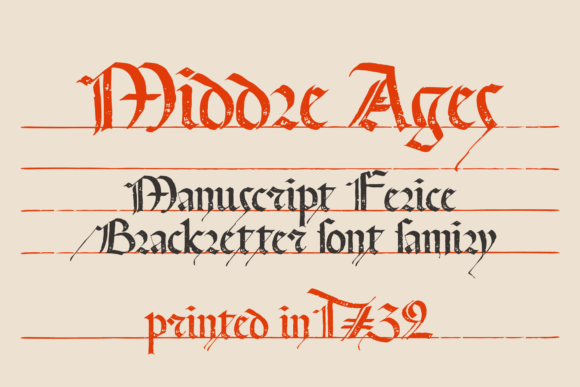
What makes Manuscript Felice visually distinct is its adherence to the blackletter tradition, often referred to as Gothic script. Unlike the clean, sans-serif lines of modern minimalism, this font is defined by intricate details.
- Sharp Angles and Dense Texture: The letterforms are characterized by vertical stress and angular strokes. This creates a dense, woven texture on the page that commands attention.
- Graceful Curves: Despite the sharp angles, there is a fluidity to the script. The curves suggest the movement of a quill on parchment, offering a balance between rigidity and organic flow.
- Visual Weight: Manuscript Felice has a heavy visual presence. It is designed to be impactful, making it unsuitable for long-form reading but perfect for establishing a mood instantly.
Practical Applications: Where History Meets Modern Design
While the aesthetic of Manuscript Felice is firmly rooted in the past, its applications are surprisingly versatile in the contemporary creative landscape. However, using a blackletter font requires a strategic approach. It is a high-impact style that can easily overwhelm a design if not handled with care.
Headlines and Hero Sections
The primary strength of Manuscript Felice lies in its ability to dominate headlines. In web design, a "hero" section often needs a powerful typographic anchor. Using this font for a main title—such as "The Dark Ages," "Medieval Festival," or "Heritage Collection"—immediately sets the thematic tone. It tells the viewer that the content has a serious, historical, or perhaps even mysterious nature.
Branding and Identity
For business owners, typography is a silent ambassador. Manuscript Felice is particularly useful for specific niches:
- Breweries and Distilleries: Many craft beverage companies look to evoke a sense of tradition and old-world brewing methods. A logo set in Manuscript Felice suggests heritage and craftsmanship.
- Heavy Metal and Rock Bands: The Gothic aesthetic is a staple in this genre. The sharp, aggressive look of the font aligns perfectly with the visual language of the music.
- Academic and Literary Projects: For books, seminars, or blogs focusing on history, philosophy, or theology, this font adds a layer of intellectual weight and gravitas.
Event Stationery
Imagine invitations for a Halloween gala, a Renaissance fair, or a themed wedding. Manuscript Felice transforms a standard piece of paper into a scroll. It works exceptionally well on physical media where the texture of the paper can complement the "handwritten" quality of the font.
Evaluating Suitability: A Guide for Creators
Before integrating Manuscript Felice into your project, it is essential to evaluate whether it fits your specific goals. While it is visually striking, it is not a universal solution.
Readability vs. Aesthetics
The most critical consideration is legibility. Blackletter fonts, by nature, are complex. The intricate loops and sharp serifs can make smaller text difficult to decipher. Therefore, Manuscript Felice should rarely, if ever, be used for body text, navigation menus, or legal disclaimers. Its purpose is display, not data transmission.
Pairing with Other Fonts
A successful design often relies on contrast. Because Manuscript Felice is ornate and dark, it pairs best with clean, lighter fonts. A sans-serif typeface like Helvetica, Arial, or a modern serif like Garamond can provide a necessary visual "breather" for the reader.
- The Contrast Rule: Use Manuscript Felice for the main header.
- The Balance Rule: Use a clean sans-serif for the sub-header and body text.
- The Harmony Rule: Ensure the color palette complements the "ink on parchment" feel—think deep blacks, creams, burgundies, or forest greens.
The Value of "Old-Timey Charm"
In an era dominated by flat design and geometric precision, there is a growing hunger for texture and imperfection. This is where the value of Manuscript Felice truly shines. It offers a tactile quality that modern fonts often lack. It feels "lived-in."
For online users and consumers, encountering this font can trigger an emotional response. It evokes nostalgia, authority, and a sense of storytelling. If you are a creator looking to build a narrative world—whether for a game, a novel, or a brand—Manuscript Felice provides a shortcut to that atmospheric immersion.
Technical Considerations
When deploying Manuscript Felice on the web, performance matters. Because the glyphs are complex, the file size of a blackletter font can sometimes be larger than a simple sans-serif. Ensure that your website loads efficiently and that the font is optimized for web use.
Furthermore, accessibility is key. Users with visual impairments may struggle with Gothic scripts. Always ensure that critical information is available in a highly legible format, even if Manuscript Felice is used for stylistic flair.
Conclusion
Manuscript Felice is more than just a collection of vectors; it is a preservation of history. By using this font, you are participating in the lineage of the written word, bringing the sharp angles and graceful curves of a medieval Italian scribe into the digital age. Whether you are designing a logo, a book cover, or a website header, this font offers a distinct, sophisticated voice that refuses to be ignored. Use it wisely, pair it carefully, and let the old-world charm elevate your next project.